


From the Mayor: Legislative Topics for the Current 2017 State Legislature
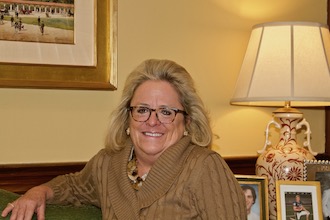
By Mary C. Marvin, Mayor, Village of Bronxville
Feb. 15, 2017: As I write, I am in Albany with my fellow mayors discussing legislative topics for the current 2017 legislature to consider.
Chief among them is the untangling of state aid to towns and villages from a governor's "consolidation" plan that requires a November county-by-county statewide vote. I wrote about the injustice, the misplaced priority of it all, in my column last week, but it remains topic-one with my colleagues here, as it should.
Needless to say, our current discussion serves to further ignite our indignation at the premise that, according to the governor, local officials do not and will not work together to share services. It is simply not grounded in fact. We are the easiest target, the runt in the schoolyard who is not a force needed to be reckoned with, and, from a money-saving perspective, the smallest component of one's overall tax burden. Statewide, municipal taxes are less than 30% of the overall tax burden, and in our village, they are less than 14 cents of every tax dollar.
The "consolidation plebiscite" is a foolhardy way to lower any segment of our tax obligations, but to exempt at least 70 to 80% of the overall bill from this scrutiny, i.e., school funding, can only point to the enormous power of New York's much-solidified and politically active teachers' union--which everyone seeking higher state and federal offices must curry favor with.
Local governments are not wasting money. Most elected officials are unpaid or receive a stipend that, if divided by hours worked, doesn't even approach former minimum wage levels.
To drill down to our local level, our village administrator is paid fully half what a comparable educator receives, shares a secretary with five other people, visits construction sites, organizes a parade, answers phones, and, when needed, shovels the front walk!--Hardly a spendthrift approach.
Contrast this belt-tightening with the tens of thousands of dollars allocated in the governor's proposed budget to rebrand his economic rollout program from "Start-Up New York" to "Excelsior." I am lost how this change of sloganeering benefits any New York taxpayer.
Even if the consolidation tie-in is somehow overcome, there is always horse-trading, and we at the local government are concerned as to what we will lose on another front to get this requirement removed.
But the process marches on, and we are all here in Albany to set yearly priorities, taking a page from other "special interest" playbooks in the hopes that our numbers and unity of ideas will garner legislative attention.
Local Government Funding Aid: First on our list is local government funding aid to help us cover the ever-escalating cost of over 200 unfunded state laws/mandates that affect local spending. Not only is it now tied to a political policy, funding is not slated to increase again this year, continuing a pattern of flat funding since 2008.
2% Tax Cap: Municipalities are all subject to the 2% tax cap on spending (which this year will actually be 1.15% because of its tie to the inflation index) and are not excluded from the cap for expenditures on public infrastructure as are school districts and the state itself from their respective caps. The result is that local governments are postponing repairs on key public infrastructures, which will have significant negative long-term repercussions.
As example, to stay under the "state tax cap," we would have had to forego the Federal FEMA flood mitigation outright grant of $5 million dollars because it carried with it a local infrastructure repair "copay."
Infrastructure Repairs: On the state level, the New York State comptroller released a report that estimated infrastructure repairs statewide now have a funding deficit of $657 billion annually.
In addition to deteriorating subterranean infrastructure, local roads and bridges are in similar disrepair. According to the report referenced above, 48% of state roads are in "fair to poor" condition and one-third of all bridges are structurally deficient. Net-net, the unintended consequence of the tax cap is that New York State infrastructure is in its worst condition in generations.
Sales Tax Revenues: During his speech to the mayors, the state comptroller shared a distressing, albeit not surprising, revenue trend. The state sales tax revenues have dramatically slowed in growth from 4% annually to barely 2%. Of course, this correlates directly with the explosion in Internet sales. Given the ever-increasing local cost--health care, in particular (the state's health insurance family plan premiums are increasing to $25,927 per employee, or over 12% above last year's rate)--for our village alone, local shopping and the sales tax revenues they generate are critical. As I have mentioned in past columns, if villagers had made all of their purchases on the Internet last year, local taxes would have risen 13%.
As I leave Albany, I am gratified by the fine and dedicated people who govern all over New York State and my hopes never dim that if united in purpose, we can improve the lot of the most important special interest group in the state--the property taxpayer.