From the Mayor: Interesting Factoids about Bronxville and Westchester County
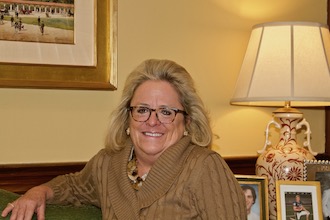
By Mary C. Marvin, Mayor, Village of Bronxville
Jul. 26, 2017: As is custom, this will be my last column until Labor Day.
I thought I'd take a break from reporting on flood projects, road repaving, and zoning codes and highlight some of the interesting factoids about our village and our home county. All were new to me until I sat in this special chair on Pondfield Road.
-
The village has 2,300 addresses, but over 10,000 people use Bronxville as their postal address.
-
Sixty percent of our residents live in single-family homes and townhouses, while forty percent reside in apartments, co-ops, and condominiums.
-
Bronxville residents pay more in property taxes to Westchester County (approximately $8 million per year) than they do to run village government.
-
With the exception of the Hasidic village of Kiryas Joel in Orange County, Bronxville is the only other community that is coterminous with its school district, and the municipality issues both school and village tax bills.
-
The village is home to five churches and a 290-bed hospital that provides emergency care to over 35,000 patients per year.
-
In 1934, 301 babies were born in Lawrence Hospital. Now the total is over 2,500, for which village hall provides a birth certificate.
-
Palumbo Place is named for Joe Palumbo, the longtime village public works director. Leonard Morange Park, on the west side, is named after the first village resident to die in service of our country in World War I.
-
The village has no county-owned roads and only one state road. Route 22 is the only road that cannot be repaved or upgraded by the village's capital plan.
-
There are 1,356 parking meters in our village and they all work.
-
The original soil at the Alfredo Fields, near Siwanoy Country Club, was sold and trucked to Queens for the World's Fair in 1939.
-
Over twenty percent of the land (97 acres) in the village is tax exempt.
-
The Bronx River was actually re-routed and the village border changed to accommodate the construction of the Bronx River Parkway, which was completed in 1925; it was the first multi-lane limited access parkway in North America.
-
Most residents commute to work by rail, with the majority working in three industry sectors--finance, insurance, and real estate.
-
Approximately 50% of all married couples have children under 18 and one-quarter of our residents live in rental housing.
-
In 1733, John Peter Zenger wrote an article about an Eastchester town election that heavily criticized the New York governor. Litigation over the article led to the immortalization of freedom of the press in the Bill of Rights, hence the name Bill of Rights Plaza at the intersection of Mill Road and Route 22 in Eastchester.
-
Already the richest and most populous county in the colony of New York by 1775, Westchester is now the second wealthiest county in New York State and the seventh wealthiest in the nation.
-
Westchester County, covering 450 square miles with 45 municipalities, is larger than 40 countries.
-
The area was first visited by Italian explorer Verrazano in 1524 and later by Henry Hudson in 1609; English settlers arrived in the 1640s and named their new home for the English city of Chester.
-
As of the last Census, Westchester had a population just slightly under one million residents, one in five of whom was born outside the United States and one in eight of whom wakes up hungry. The county is served by 48 public school districts, 118 private and parochial grammar and secondary schools, and 14 colleges.
-
Forbes rated it the ninth best place to grow old, citing the gorgeous natural beauty within such close proximity to Manhattan as major positives.
-
Some Westchester Firsts:
-
Union Church in Pocantico Hills has nine Chagall stained-glass windows and one Henri Matisse window. The Matisse “rose window” was commissioned by Nelson Rockefeller to honor his mother. Matisse finished the design just two days before he died. The Chagall windows, the only series in America, were commissioned by David Rockefeller.
-
The first chapter of the Garden Club of America was founded in Bedford in 1938.
-
Paddle tennis was invented in Scarsdale in 1928 and first played at the Fox Meadow Club there in 1931.
-
Yonkers resident Leo Baekland invented one of the world’s first and most useful plastics in 1907 and formed the Bakelite Corporation in 1910. It manufactured the glossy brightly colored plastics that defined the '50s and '60s.
-
In 1888, Yonkers resident John Reid became the first person to play golf on American soil, naming his three-hole course in a local apple orchard St. Andrews. It was even here in Westchester where the dubious tactic of hitting a second ball off the first tee if you didn’t like your first one--a Mulligan--got its name!
-
Have a safe, healthy, and fun summer and "I'll see you in September!"